
Why Capability, Not Software, Decides Project Outcomes?
A practical framework for closing the capability gap before your next ERP investment
Introduction
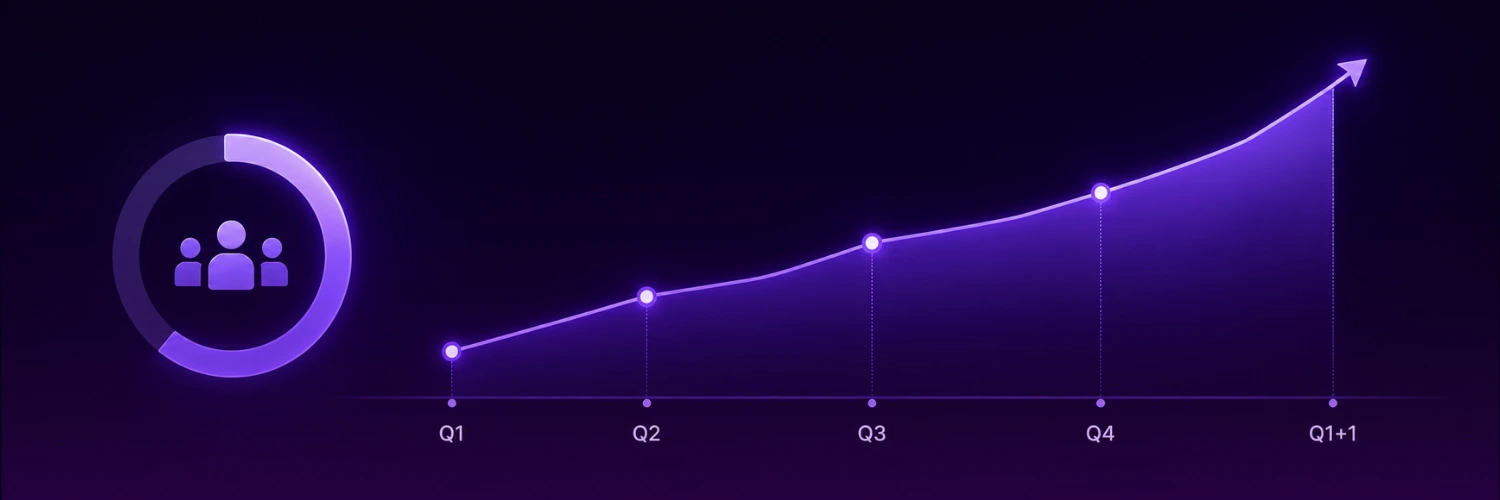
Over 95% of UAE employers hire senior talent from abroad for niche digital roles, according to the UAE Ministry of Economy. General IT graduates remain abundant across the region. The shortage sits specifically in deep technical and functional specialists, the people who can translate a business process into a working system, not just configure software. ERP projects sit directly inside that shortage, and it shows up in project outcomes more consistently than any platform choice does.
The Numbers Behind the Regional Skills Gap
The gap isn't a hiring-volume problem. It's a depth problem. Companies across the UAE report no shortage of candidates for general technology roles, but a severe shortage of specialists who combine domain expertise with technical execution, the profile an ERP implementation actually needs at its core. That mismatch between plentiful general talent and scarce specialist talent is what the Ministry of Economy's research points to directly, and it explains why so many organizations default to hiring internationally for these roles rather than developing them internally.
Why This Specifically Threatens ERP Projects
An ERP implementation isn't primarily a technical exercise. It's a business process redesign exercise that happens to run on software. The skill that determines success, mapping how a business actually operates and translating that into system logic, sits closer to business analysis than to IT. Most organizations staff ERP projects with technical configuration skill and assume process expertise will be supplied entirely by an external consultant. When that consultant leaves at go-live, the internal team is often left maintaining a system it never fully understood the logic behind.
Building Capability Instead of Just Hiring For It
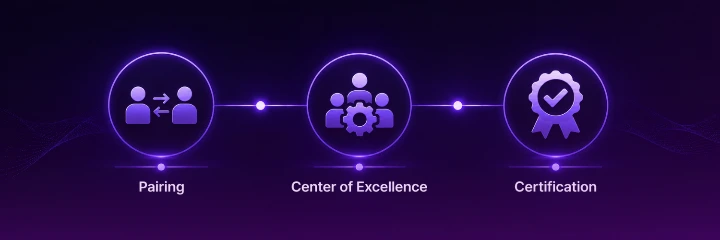
Pair every external consultant with an internal counterpart
Every workstream on an ERP project should have a named internal owner working alongside the consultant, not observing from a distance. That pairing is what transfers the reasoning behind a configuration decision, not just the configuration itself.
Build a center of excellence instead of a one-time project team
Organizations that sustain ERP value past go-live typically formalize a small internal team responsible for the system long-term, rather than dissolving the project team the week implementation ends.
Certify internally before certifying externally
Vendor certification programs exist for exactly this gap. Investing in internal certification during the implementation, not after, gives a company its own source of the specialist skill the market is short on, rather than depending on it being available externally every time a change is needed.
Conclusion
The organizations getting durable value from ERP investments in the UAE aren't the ones with the most sophisticated software. They're the ones that treated the skills gap as a project risk to be managed from day one, not a hiring problem to be solved after go-live. Closing that gap starts with how a project team is structured, not with which platform gets selected.
Frequently Asked Questions
No. General IT talent is relatively abundant. The shortage is specifically in specialists who combine business process expertise with technical implementation skill.
Because an ERP system encodes how a business actually operates. Configuring it correctly requires understanding the process being modeled, not only the software's technical settings.
The organization often ends up maintaining a system it doesn't fully understand once the consultant's engagement ends, which slows down every future change or upgrade.
A small, formally resourced internal team responsible for the ERP system long-term, covering configuration, training, and continuous improvement after the initial implementation ends.
It reduces dependency for ongoing changes and second-tier support, though complex projects and major upgrades still typically benefit from external expertise.
During the implementation itself, by pairing internal staff directly with external consultants on every workstream, rather than waiting until after go-live.