
Enterprise Mobile Application Development in 2026:
The defining variable in enterprise mobile application development in 2026 is not the frontend framework, the AI feature set, or the UX design. It is the depth and reliability of the integration between the mobile layer and the enterprise system of record. Apps that read from and write to ERP data accurately, in real time, across multiple legal entities, with embedded compliance logic, those are the apps that generate measurable operational value. Everything else is a productivity tool with a short shelf life.
The mobile app is not the product. The integration is the product.
This is the architectural insight that separates enterprise mobile projects that deliver sustained ROI from those that impress in the demo and erode in production. In 2026, the enterprise mobile application market is large, growing, and saturated with capability. AI-native development tools, cross-platform frameworks, agentic workflows, and offline-first architectures have all matured to the point where building a functional enterprise app is no longer technically difficult.
What remains genuinely difficult and what most organisations underestimate during scoping is connecting that app to the operational reality it is supposed to serve. That operational reality lives in the ERP.
This post addresses what enterprise technology leaders in the UAE and GCC need to understand about the trends reshaping enterprise mobile development in 2026 not as a catalogue of features, but as a set of architectural decisions with direct consequences for operational performance.
Trend 1: AI-Native Development Is Accelerating Delivery, and Exposing Integration Debt
Agentic AI has entered enterprise mobile development as a build-time tool, not just a runtime feature. Development teams use AI agents to manage codebases, generate UI from design files, monitor telemetry, and identify regression patterns before they accumulate. The measurable output is faster delivery cycles and fewer defects reaching production.
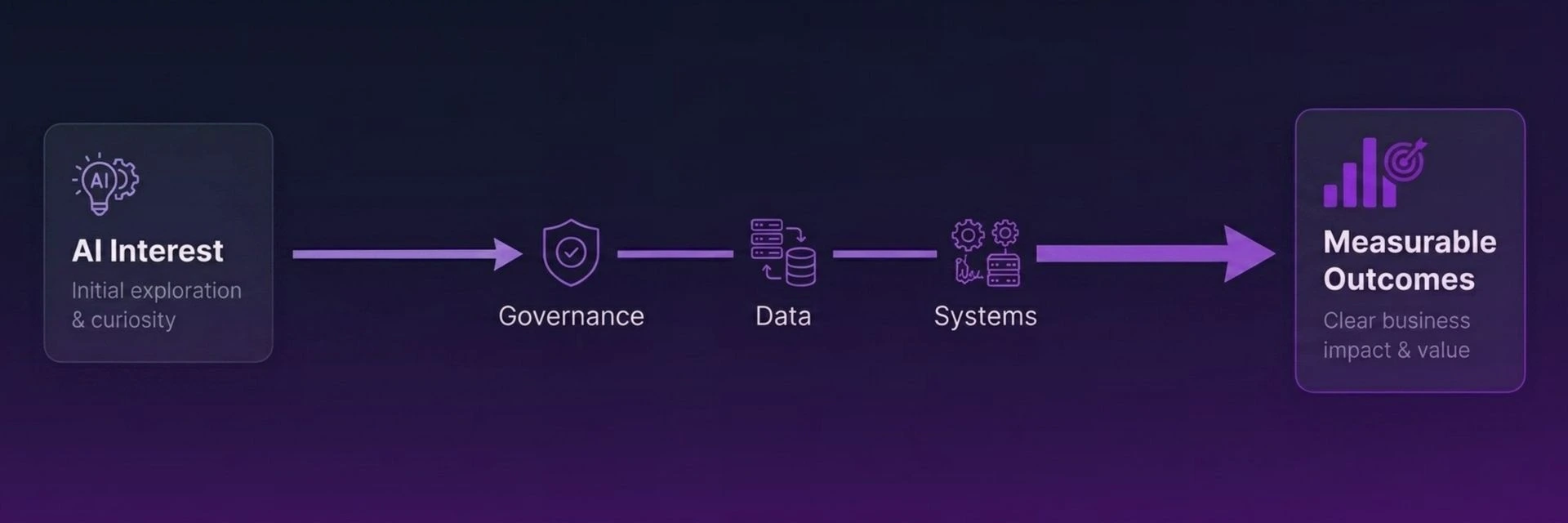
For enterprise technology leaders, the implication is not primarily about development speed. It is about what faster delivery cycles reveal. When a mobile app reaches production in eight weeks instead of twenty, the integration gaps that were previously hidden in long development timelines surface immediately. An AI-generated UI connected to an ERP that has inconsistent field structures across legal entities, or that requires manual reconciliation between modules, will fail in production within the first operational week.
The global enterprise application market was valued at USD 320 billion in 2024 and is projected to reach USD 625 billion by 2030, growing at 11.8% CAGR (Grand View Research, 2025). This growth is accelerating the deployment of mobile layers across enterprise systems that were not originally designed to support mobile access. The resulting integration debt the gap between what the mobile app expects from the backend and what the backend actually delivers is the primary cause of enterprise mobile project failure in the GCC market.
The resolution is architectural prioritisation. Before any AI development tooling is selected, the ERP's data model must be assessed for mobile readiness: field consistency across entities, API availability for live data reads, validation logic that operates at the transaction layer, and audit trail completeness. Odoo ERP custom development in the enterprise mobile context begins with this assessment because the mobile layer is only as capable as the system architecture it reads from.
Trend 2: Agentic AI Features in Enterprise Apps Require ERP-Level Data Integrity
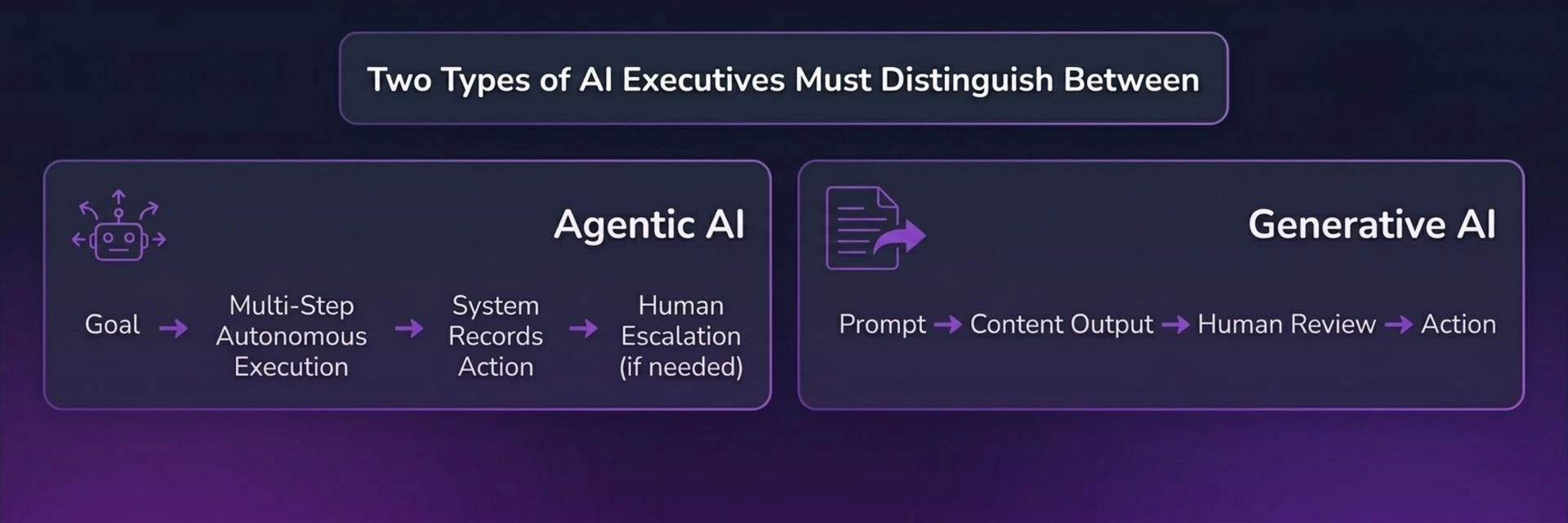
The shift from AI-assisted to AI-agentic enterprise apps is the most consequential development in enterprise mobile in 2026. An AI assistant responds when prompted. An AI agent acts submitting approvals, updating records, routing exceptions, escalating anomalies with limited human oversight at the point of execution.
Task-specific AI agents are projected to be present in 40% of enterprise applications by end of 2026, up from less than 5% in 2025 (multiple industry sources). In mobile enterprise environments, this means field agents, warehouse operatives, finance teams, and procurement managers will interact with apps that take action in the ERP on their behalf.
This capability has a structural precondition that is non-negotiable: the ERP data the agent operates on must be consistent, machine-readable, and free of manual reconciliation dependencies. An agentic approval workflow in a procurement app that submits purchase orders to an ERP with inconsistent vendor classification structures does not create efficiency it creates uncontrolled data quality problems at the transaction layer.
The governance architecture required for agentic enterprise apps mirrors what ERP compliance architecture requires for regulatory environments: every agent action must have a defined authority boundary, a transaction-level audit trail, and an escalation path for decisions outside the system's authorised scope. Organisations that deploy agentic mobile features without this governance layer will encounter the same failure mode autonomous systems producing outputs that no human catches until the damage is recorded.
For UAE enterprises operating under FTA audit requirements, this governance layer is additionally a compliance requirement. An AI agent that processes a transaction without generating the audit record the ERP is required to maintain under Federal Law No. 7 of 2017 creates regulatory exposure, not just operational risk.
Trend 3: Offline-First Architecture Has Become a Compliance and Operational Requirement
Offline-first architecture the design principle that enterprise mobile apps must function completely without network connectivity and synchronise cleanly when connectivity is restored has graduated from a UX preference to an operational and compliance requirement in the GCC context.
Field operatives in logistics, construction, and facilities management across the UAE routinely work in environments with intermittent connectivity: warehouses, construction sites, remote facilities, and cross-border transit routes. An enterprise app that depends on a live API connection for every operation creates a workflow that stops whenever connectivity degrades. In regulated environments, it also creates compliance risk: if the app cannot record a transaction locally and synchronise it accurately when connectivity is restored, the audit trail has a gap.
The architectural challenge of offline-first is not the local storage implementation that is solved. The challenge is conflict resolution: when a field operative updates a record offline and the ERP has been updated by another user in the same period, which version wins, under what logic, and how does the system flag the discrepancy for human review?
This conflict resolution logic must be designed into the ERP's data model and synchronisation architecture, not added to the mobile app's code as an afterthought. It is the same architectural discipline behind GCC operating model fragmentation: rules for how competing updates are resolved, which entity holds authoritative records, and how discrepancies surface to the appropriate reviewer before they propagate through the system.
For UAE enterprises whose ERP deployments span multiple legal entities mainland companies, free zone entities, branch offices offline-first architecture must also carry entity context. A field operative working on behalf of one entity must have their offline transactions attributed to the correct entity record on synchronisation, with the correct tax classification, the correct approval routing, and the correct audit trail. This is not a mobile development problem. It is an ERP architecture problem that the mobile layer exposes.
Trend 4: Zero-Trust Security Architecture Is No Longer a Security Team Decision
Zero-trust security the principle that no user, device, or session is trusted by default, and that every access request must be continuously verified has moved from enterprise security policy into mobile app architecture. In 2026, it is a design requirement that affects how the mobile app authenticates, what data it can access, and how access permissions change as the user's context changes.
For enterprise mobile apps that connect to ERP systems, zero-trust architecture has specific implementation requirements. Role-based access controls must mirror the ERP's permission structures a warehouse manager accessing inventory data through the mobile app must have the same access boundaries as they would accessing the ERP directly. Session tokens must expire and re-authenticate based on inactivity and context changes, not on fixed intervals. And every data access event must be logged at a level of granularity that supports audit investigation.
The relevance for UAE enterprises is concrete. FTA audit procedures require that access to financial records is controlled and logged. An enterprise mobile app that allows broader data access than the ERP would permit because the mobile permission layer was designed separately from the ERP's access control framework creates an audit surface that the organisation cannot defend.
Zero-trust implementation in enterprise mobile is therefore an ERP integration question as much as a security architecture question. The access control framework must be designed from the ERP's permission model outward, not from the mobile app's authentication layer inward. This is the architectural discipline that integrated API solutions must enforce: every API endpoint carries the ERP's permission model, and the mobile app's access is governed by the system of record not by a separate mobile security layer that approximates it.
Trend 5: Cross-Platform Development Is the Correct Default for Multi-Entity GCC Enterprises
The enterprise argument for cross-platform development a single codebase serving both iOS and Android has moved from cost justification to architectural rationale. In the GCC enterprise context, where organisations operate across multiple legal entities, multiple workforce profiles, and multiple device policies, maintaining separate native codebases for each platform creates a maintenance burden that directly impedes the ability to synchronise updates across the organisation.
When a regulatory change requires a field in the mobile app to be updated a new VAT classification, an additional approval step for transactions above a threshold, a new mandatory field for FTA-compliant invoice generation that update must reach every user on every platform simultaneously. A cross-platform codebase makes this a single release event. Parallel native codebases make it two separate development and release cycles with a window of inconsistency between them.
For UAE enterprises whose mobile apps touch compliance-relevant workflows procurement approvals, invoice processing, inventory management, expense submission that inconsistency window is a compliance risk. The update that adds a mandatory field for e-invoice compliance must reach every user before the FTA mandate deadline, not in two sequential releases.
Cross-platform frameworks Flutter and React Native being the most production-stable for enterprise contexts provide this release consistency. The architectural constraint is the same as for offline-first and zero-trust: the cross-platform app must connect to the ERP through a single, well-governed API layer that serves both platform targets without branching the data model or the business logic.
The web development and mobile application architecture decision for GCC enterprises should therefore start from the ERP integration requirements, work outward to the API architecture, and select the cross-platform framework that best supports that integration.
The Architecture Decision That Determines All Others
The five trends described above AI-native development, agentic AI features, offline-first architecture, zero-trust security, and cross-platform delivery — share a common dependency. Each one requires the enterprise's ERP to have a specific set of structural properties before the mobile layer can implement the trend reliably.
AI-native development reveals integration debt. Agentic features require data integrity and governance. Offline-first requires conflict resolution logic in the data model. Zero-trust requires access control designed from the ERP's permission framework. Cross-platform requires a unified API layer with consistent business logic.
In every case, the mobile architecture decision is determined by the ERP architecture decision that precedes it. This is the inversion that most enterprise mobile projects miss: they design the mobile app first and discover the ERP constraints during integration testing. The correct sequence is the opposite.
For technology leaders in UAE and GCC enterprises planning a mobile development programme, the first deliverable should be an ERP integration readiness assessment: mapping which data the mobile app needs to read and write, whether the ERP's current architecture can support those operations in real time with full audit trail, and what structural changes are required before mobile development begins.
This assessment is not a development delay. It is the work that determines whether the mobile investment produces operational value or operational debt. Enterprises that complete it before building avoid the remediation costs that follow from discovering ERP constraints after the mobile app is in production.
ERP consulting and mobile architecture services in the UAE context are most valuable precisely at this point: before the mobile project brief is written, when the architectural decisions that determine the programme's outcome are still open.
Frequently asked questions
Enterprise mobile apps operate within a system of record typically an ERP that governs how data is structured, validated, and stored. Every interaction through the mobile app must be consistent with the ERP's data model, permission framework, and audit requirements. Consumer apps manage their own data layer. Enterprise apps inherit the ERP's constraints, and the success of the mobile implementation depends on the quality of that inheritance. Apps built without this constraint in view produce data quality problems and compliance gaps that become visible only after go-live.
Because the mobile app is a presentation and interaction layer it does not own the data it displays or the logic it executes. Those belong to the ERP. When the ERP's data model is inconsistent across entities, or when validation logic runs after the transaction is committed, or when audit trails are incomplete, the mobile app inherits all of these structural problems. No amount of frontend engineering resolves a backend data architecture problem. The integration layer is where enterprise mobile projects succeed or fail.
UAE e-invoicing requirements under Ministerial Decisions 243 and 244 of 2025 require that invoice data is structured according to the PINT AE standard, validated before commitment, and archived on-shore for a minimum of five years. Enterprise mobile apps that process invoices field sales apps, procurement tools, service delivery platforms must enforce the same compliance requirements at the mobile transaction layer. This means the mobile app's submission logic must connect to the ERP's compliance validation, not generate its own. The compliance architecture is designed in the ERP and surfaced through the mobile interface.
What is offline-first architecture and when is it required for GCC enterprise apps? Offline-first means the mobile app records all user interactions locally when connectivity is unavailable and synchronises them to the ERP accurately when connectivity is restored. It is required for any enterprise deployment where field operatives work in environments with intermittent connectivity logistics, construction, facilities management, field sales. The critical architectural challenge is conflict resolution: determining how the synchronisation logic handles cases where the same record was updated both offline and in the ERP during the disconnected period. This logic must be defined in the ERP's data model and synchronisation architecture, not improvised in the mobile app's code.
For most GCC enterprise deployments, cross-platform development using Flutter or React Native is the correct architectural choice. It provides a single codebase that can be updated simultaneously across all users on all platforms critical when regulatory changes require the app to be updated before a compliance deadline. Native development may be appropriate for apps with specific hardware integration requirements, but for the majority of enterprise mobile use cases ERP access, approval workflows, field data entry, inventory management cross-platform provides better operational consistency and lower maintenance cost without meaningful performance trade-off.
Advisory note: Technology capability assessments and market projections referenced in this post are based on publicly available industry research and enterprise deployment experience as of the date of publication. Specific regulatory requirements reference UAE FTA documentation current at time of writing. Organisations should validate compliance interpretations with qualified legal and technical advisors before implementation.
Strategic Takeaway: Build the Integration First
The enterprise mobile development programmes that deliver measurable operational value in 2026 share a common characteristic: they were designed from the backend forward. The ERP integration requirements were mapped first. The API architecture was designed to serve those requirements. The mobile layer was built on top of an integration foundation that was ready for it.
The programmes that underdeliver share a different characteristic: the mobile app was built first, the integration was attempted during or after development, and the ERP's structural limitations surfaced as production problems that no frontend engineering could resolve.
This is not a technology choice. It is a sequencing decision. In an environment where AI development tools, cross-platform frameworks, and agentic capabilities all make the mobile layer easier to build, the constraint that determines outcomes is increasingly the quality of the system architecture underneath it.
Build the integration first. The app follows naturally.
Related Insights
For further reading on how ERP architecture, API integration, and compliance design create the foundation for enterprise mobile performance:
Web Platforms as System Extensions: Where Frontend Meets ERP Logic
Tax Compliance Systems: How Regulations Reshape ERP Architecture